
A microphone is listening
There's a moment in every clinic visit that never used to exist. A patient describes their symptoms, their fears, sometimes the thing they haven't told anyone else — and a microphone is listening.
AI scribes have earned their place in the exam room. The documentation burden is real: hours of after-visit charting, notes written from memory at 9 PM, the slow burnout of doing data entry when you trained to do medicine. Ambient scribing gives clinicians their evenings back. We built one into Moxcares because our clinics asked for it, and because the technology finally got good enough to deserve their trust.
But somewhere in the rush to ship these tools, a question got quieter than it should be: what happens to the recording?
The industry has an audio problem it doesn't talk about
Ask an AI scribe vendor where the audio goes after the note is written and you'll get a range of answers. Some delete it quickly. Some retain it for weeks — usually framed as “quality assurance” or “model improvement.” Some are vague, which is its own answer.
Here's what retention means in practice. A patient's voice — describing their depression, their pregnancy, their substance use, their diagnosis — sitting in cloud storage. Every day it exists is a day it can be breached, subpoenaed, mishandled, or quietly repurposed. And the primary business reason vendors keep audio isn't quality assurance. It's training data. Your patients' voices become the raw material for someone else's model.
We'll say it plainly: retained audio is risk with no benefit to the patient. The patient gets nothing from their recording living another 30 days. The clinic gets nothing but liability surface. Only the vendor benefits — and only if they're doing something with your data you'd probably want to know about.
“The words belong in the chart. The voice belongs to the patient.”
The decision: the audio dies when the note is born
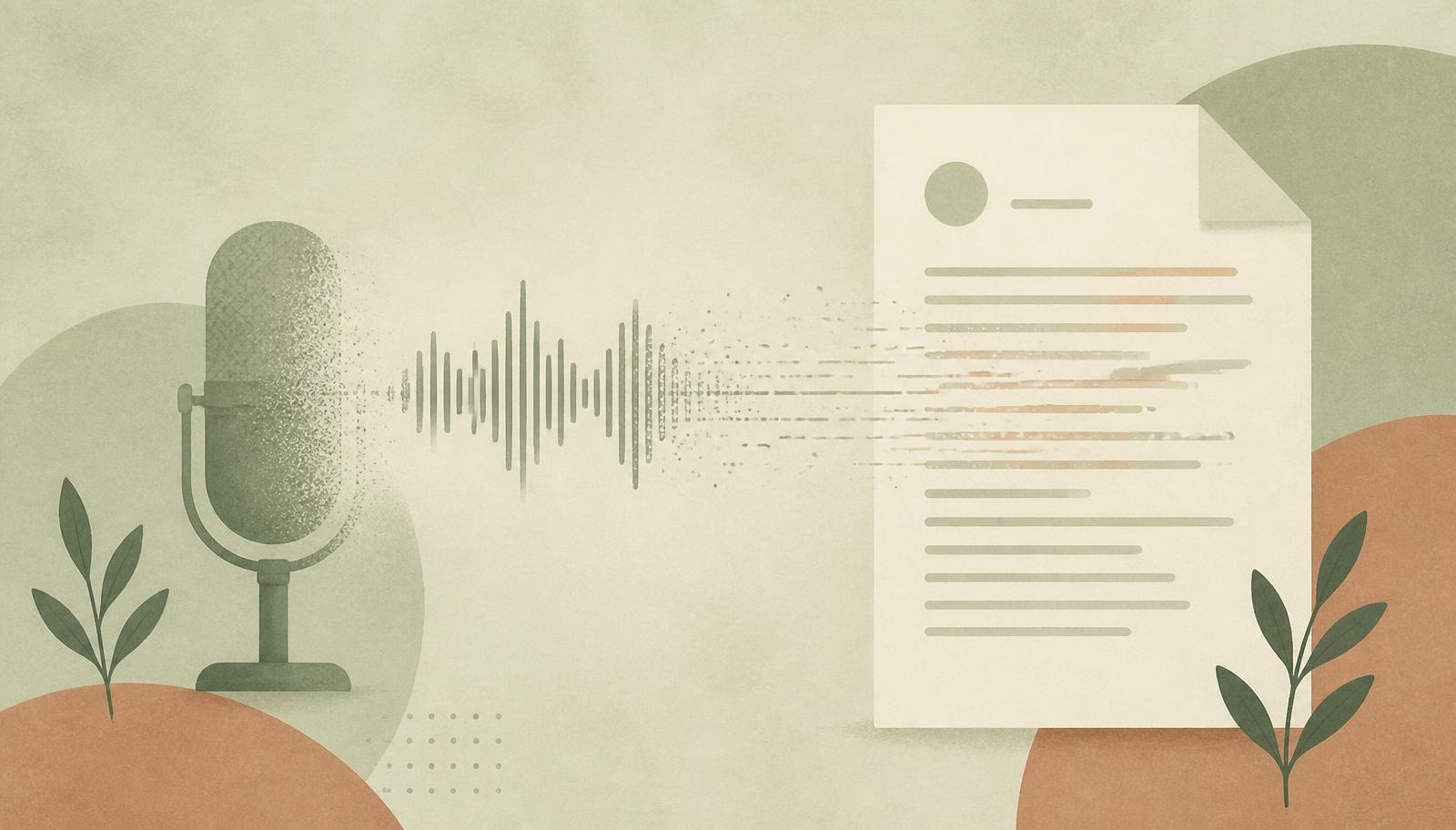
At Moxcares the scribe works like this: the visit is recorded with the patient's spoken consent, the audio is transcribed, the transcript drafts the clinical note — and the moment that pipeline completes, the audio is deleted. Not archived. Not retained for a grace period. Not “de-identified” and kept. Deleted, as a structural step of the same process that creates the note. The system cannot finish drafting without purging.
We can say this simply: we never store your patients' voices.
The honest question a skeptic asks next: don't you lose something by deleting it? If a note is ever disputed, isn't the recording the evidence?
This is where the design earns its keep. What survives is the transcript — the words, kept with the visit as part of the clinical record, with every AI-drafted statement linked back to the passage it came from. When a clinician reviews a draft they can see exactly what was said in support of each line, and anything the system couldn't verify is flagged as unverified rather than dressed up as fact. Traceability doesn't require the audio. It requires the words and the chain — and the chain survives the purge completely.
Voices, not words. The words belong in the chart. The voice belongs to the patient.
Questions worth asking any scribe vendor
If you're evaluating ambient AI for your clinic — ours or anyone's — ask these, in writing:
- How long does patient audio exist, exactly? “Briefly” and “per our retention policy” are not numbers.
- Is my patients' data used to train your models? If the answer takes more than one sentence, it's yes.
- Can my clinician see the evidence behind each drafted statement? A note you can't trace is a note you're signing on faith.
- What does the patient consent to, in what words, and where is that recorded?
- If transcription fails, what happens? The answer should never be “the visit is silently lost.”
We built Moxcares to survive all five without a lawyer in the room. The recording exists only while it's being processed. The transcript stays with the visit, disclosed to the patient in the consent itself. The clinician sees the evidence behind every drafted line. And the audio is gone before anyone could mishandle it — because the safest data breach is the one that's impossible.
Your patients trust you with their voices. Choose technology that's worthy of being in the room.
Keep reading
An AI scribe that never stores your patients' voices
Consent-based capture, traceable drafts linked to the transcript, and audio deleted the moment the note exists.
See how it works