
Charts & Documents
A chart that answers back.
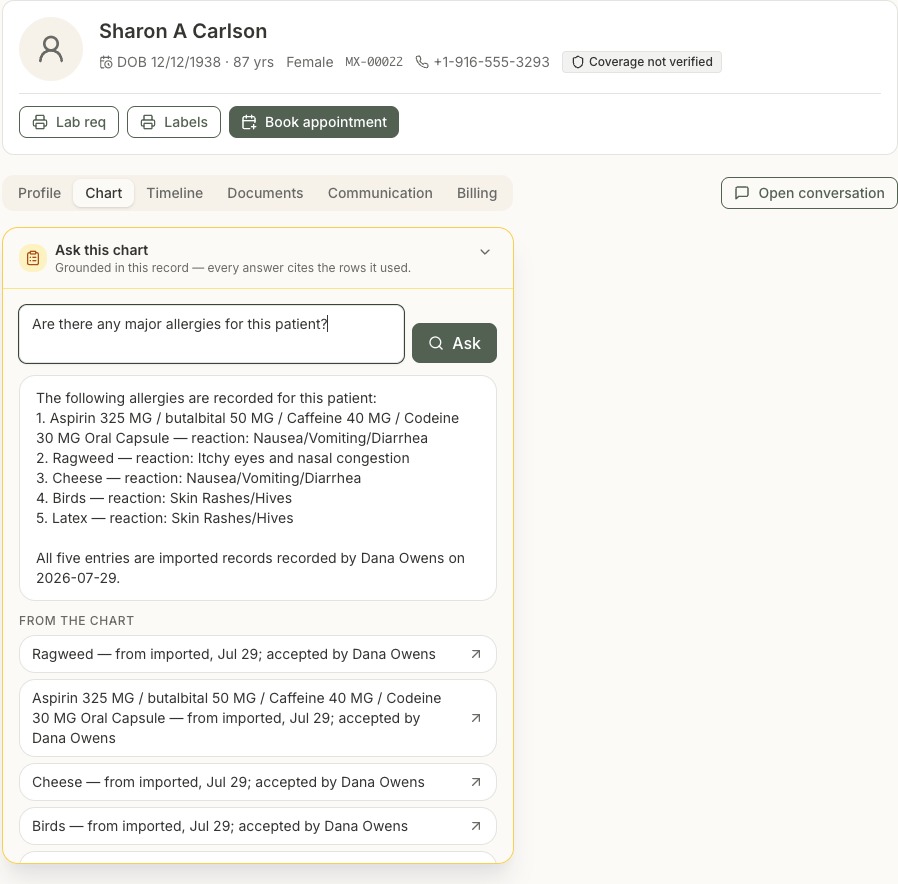
Ask questions in plain English. Get answers cited to the exact row, note, or lab. AI proposes chart entries from intake, labs, and faxes — you accept with one click.
The problem
Most EHRs are where data goes to be retyped.
Documents, labs, and notes live in different places, so the same patient fact gets entered again and again — while the clinician juggles tabs to find the context.
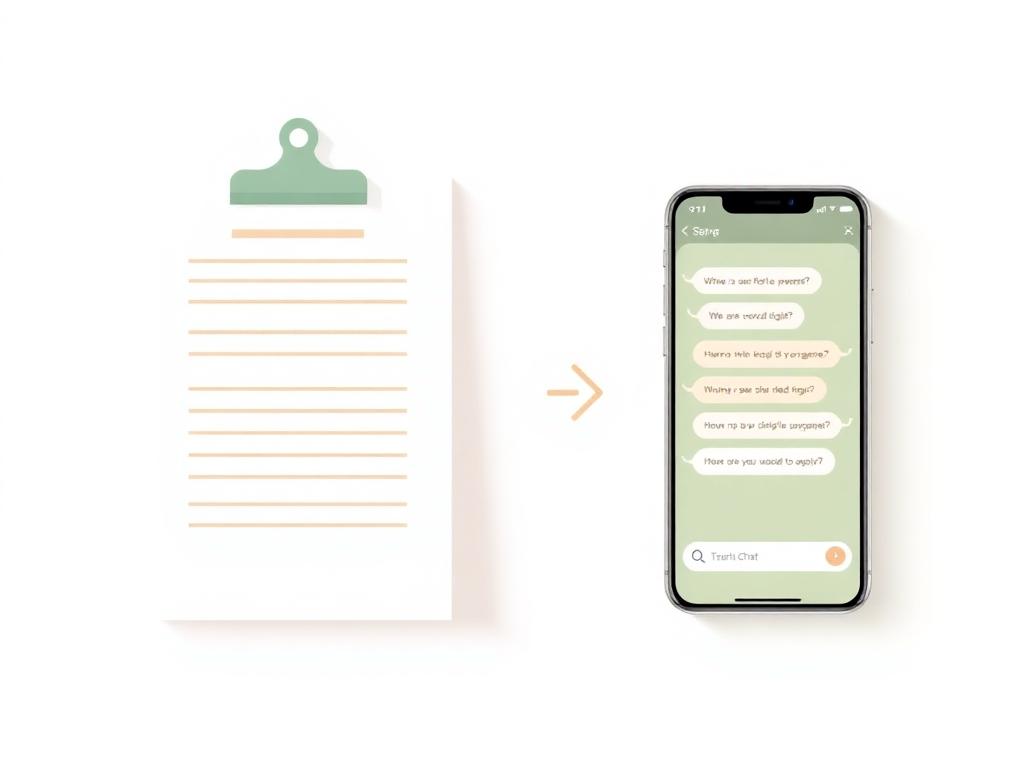
The EHR is where data goes to be retyped
Intake answers, referral letters, and faxed reports all get re-keyed into the chart by hand — often by two different people.
Documents live in five places
Labs in a portal, imaging on a disc, referrals in email, consents in a scanner folder. Nothing is where the visit is.
Tab-juggling during the visit
A spreadsheet, a Word template, the legacy EHR, and a PDF viewer — all open at once while the patient waits for eye contact.
Legacy systems don't talk to the clinic
Scheduling, messaging, and billing sit outside the chart, so the same patient fact is entered again in every system that needs it.
What we built
From intake to claim, the chart flows in one spine.
Patient data starts in intake, labs fill in automatically, staff act in one click, and the visit closes out into claims without anyone retyping it.
Chart starts with intake
Intake answers flow straight into the record, so the chart already knows the patient before the visit begins.
Labs get filled in
Results land structured and trended, with abnormal and elevated values highlighted — no squinting at a scanned PDF.
One-click templates
Referrals, lab requisitions, and labels are prebuilt. Staff generate them from the chart in a click instead of rebuilding a Word doc.
Fax + message built-in
Send referrals by fax or secure message without leaving the record. Replies and documents attach automatically.
Flows into claims
Chart charges become claims and ERAs post to invoices — no retyping.
Why this is different
Intake, communication, documents, claims, and billing — on the same spine as the chart.
Nothing is bolted on, so nothing has to be re-entered. And the AI layer on top doesn't guess: every answer is cited to the exact row, note, or lab it came from. First of its kind in this market.
What you get
Charts built for the way clinicians actually work.
Ask the chart in plain English
'What was her last A1c and when did it start climbing?' You get an answer, and every claim is cited to the row, note, or lab it came from — one click jumps to source.
One-click chart proposals
Mox drafts entries from intake answers, lab PDFs, faxed reports, and prior notes. Accept, edit, or reject. Nothing lands in the chart without a human.
Structured notes without typing
Ambient scribing turns the visit into a structured SOAP note with problems, meds, and plan. Sign it as-is or edit inline.
Provenance on every field
Every entry shows who wrote it — you, a teammate, or Mox — and the source it drew from. No mystery text in the chart.
Template review as a first-class step
Owners approve intake templates and note templates before they go live. Changes are versioned; the chart records which version was used.
Append-only audit trail
Every read, edit, and AI proposal is written to a hash-chained log. Tamper-evident by design.
Two things Mox never does alone
Nothing goes into the chart without a human.
Mox drafts. A clinician accepts. Prescriptions and diagnoses always require a signature. Every AI proposal is logged as a proposal until a person acts on it.
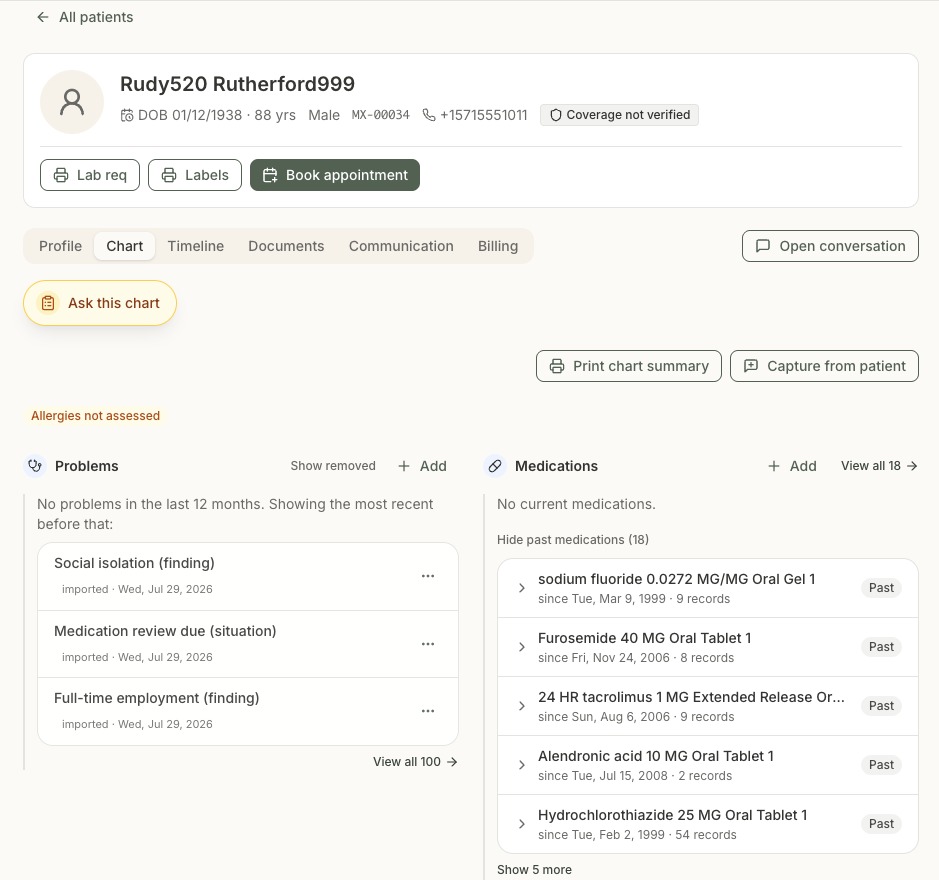
Bring your charts over in an afternoon.
C-CDA compliant data import. Patients, problems, meds, allergies, notes, and documents move together.