
Modern Charting & EHR
A modern chart built for AI. Not retrofitted with it.
Moxcares is the first AI-native charting platform for modern clinics — a fully integrated record where intake, schedule, chart, documents, insurance, and billing run on the same spine. Secure, auditable, and HIPAA-ready from the ground up.
See the chart answer back
Tell us where to send your walkthrough invite.
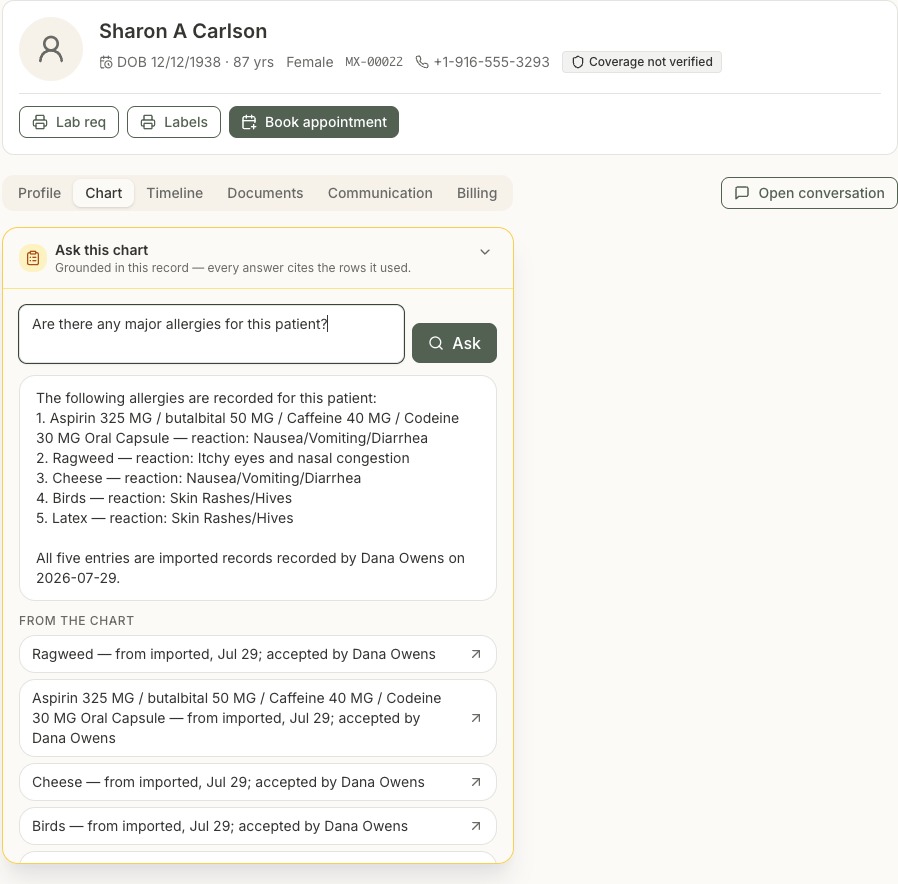
One platform, from patient intake to billing.
Intake, scheduling, charting, documents, insurance, and payments share a single record — so the same patient fact is captured once and never retyped again.
- Ask the chart in plain English. Answers cited to the exact row, note, or lab — one click jumps to the source. No guessing, no hallucinated history.
- AI proposes, clinicians decide. Mox drafts entries from intake, labs, and faxes. You accept, edit, or reject. Nothing lands in the chart without a human.
- Secure, auditable, HIPAA-ready. BAA-backed, encrypted, role-based, with an append-only hash-chained log of every read, edit, and AI action.
1
Record from intake to claim
0
AI writes without a human
100%
AI actions on an audit trail
1 afternoon
C-CDA chart migration
Everything a modern clinic charts, schedules, and bills — in one place.
Each module reads and writes the same record, so the chart is always current and the claim is always ready.
01 · Ask the chart, get citations
First of its kind"What was her last A1c and when did it start climbing?" You get an answer, and every claim is cited to the row, note, or lab it came from.
Learn more about 01 · Ask the chart, get citations →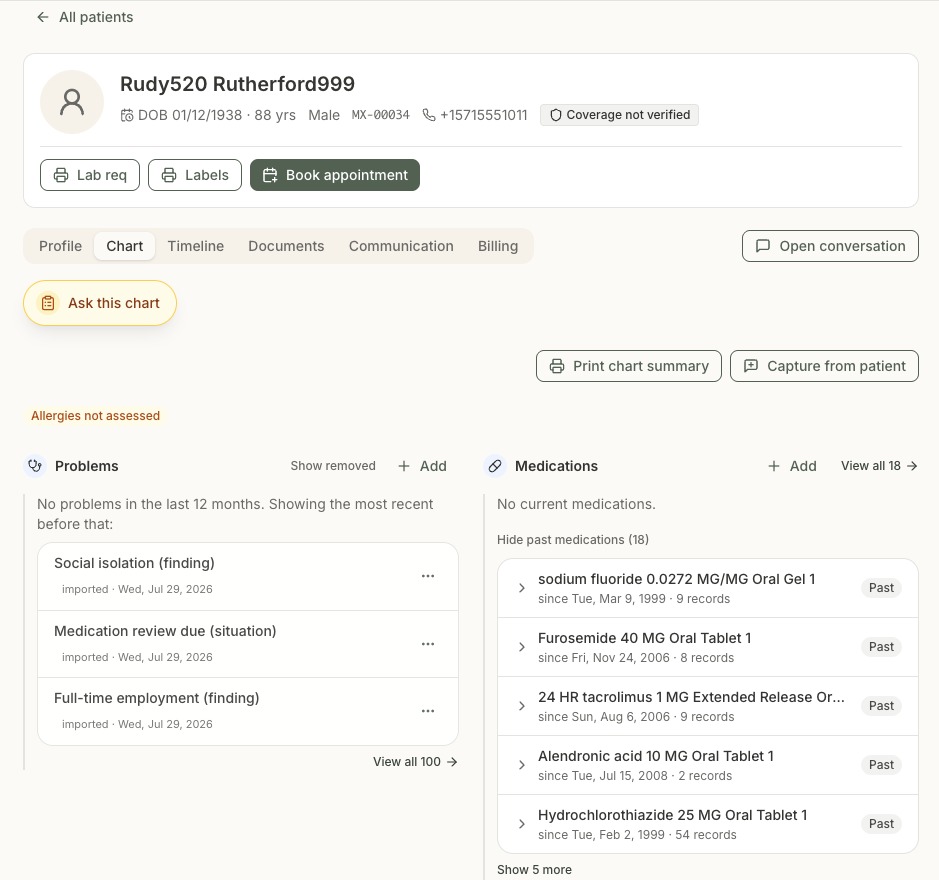
02 · One-click chart proposals
Mox drafts entries from intake answers, lab PDFs, faxed reports, and prior notes. Accept, edit, or reject — every proposal logged.
Learn more about 02 · One-click chart proposals →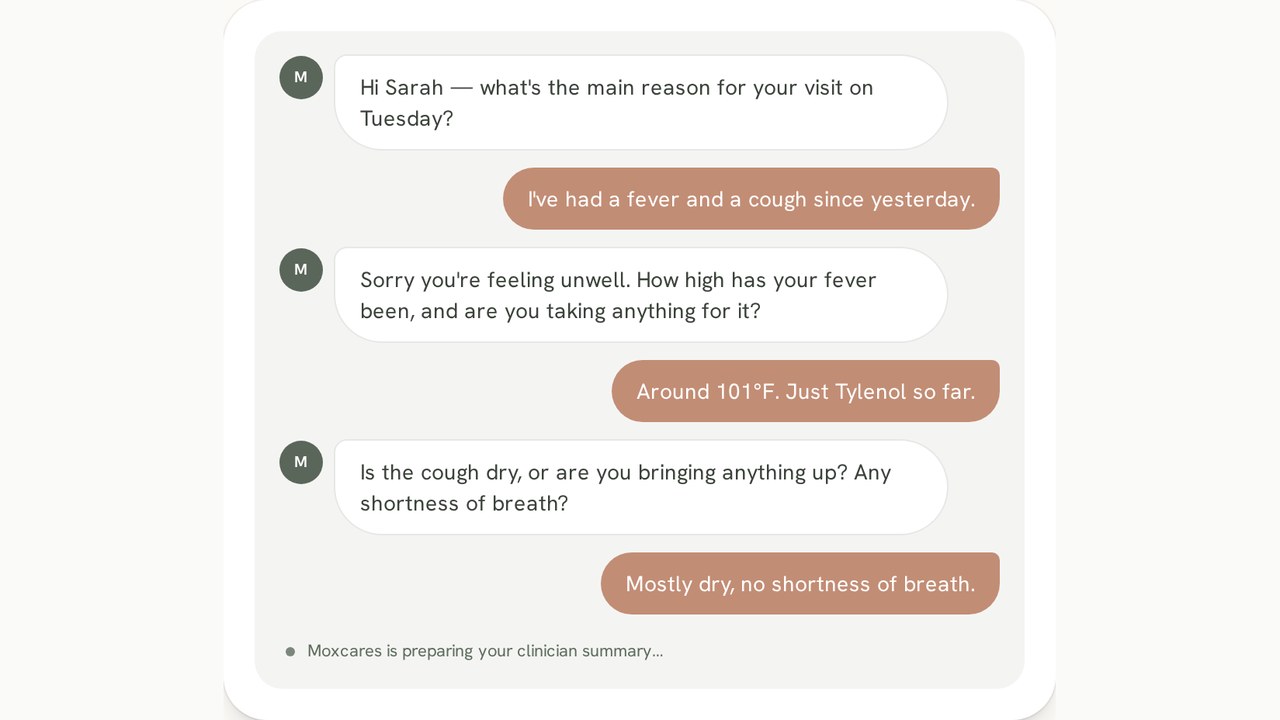
03 · Conversational intake
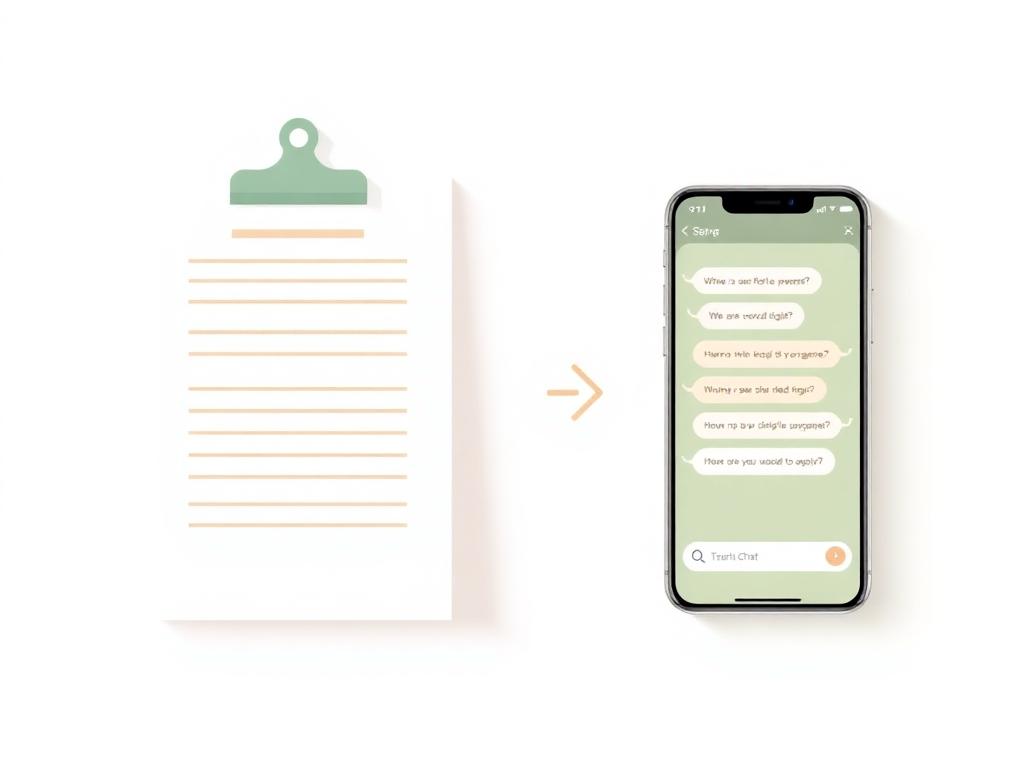
Patients chat with an adaptive AI on their phone. History branches into medications, red flags escalate, and structured data lands in the chart.
Learn more about 03 · Conversational intake →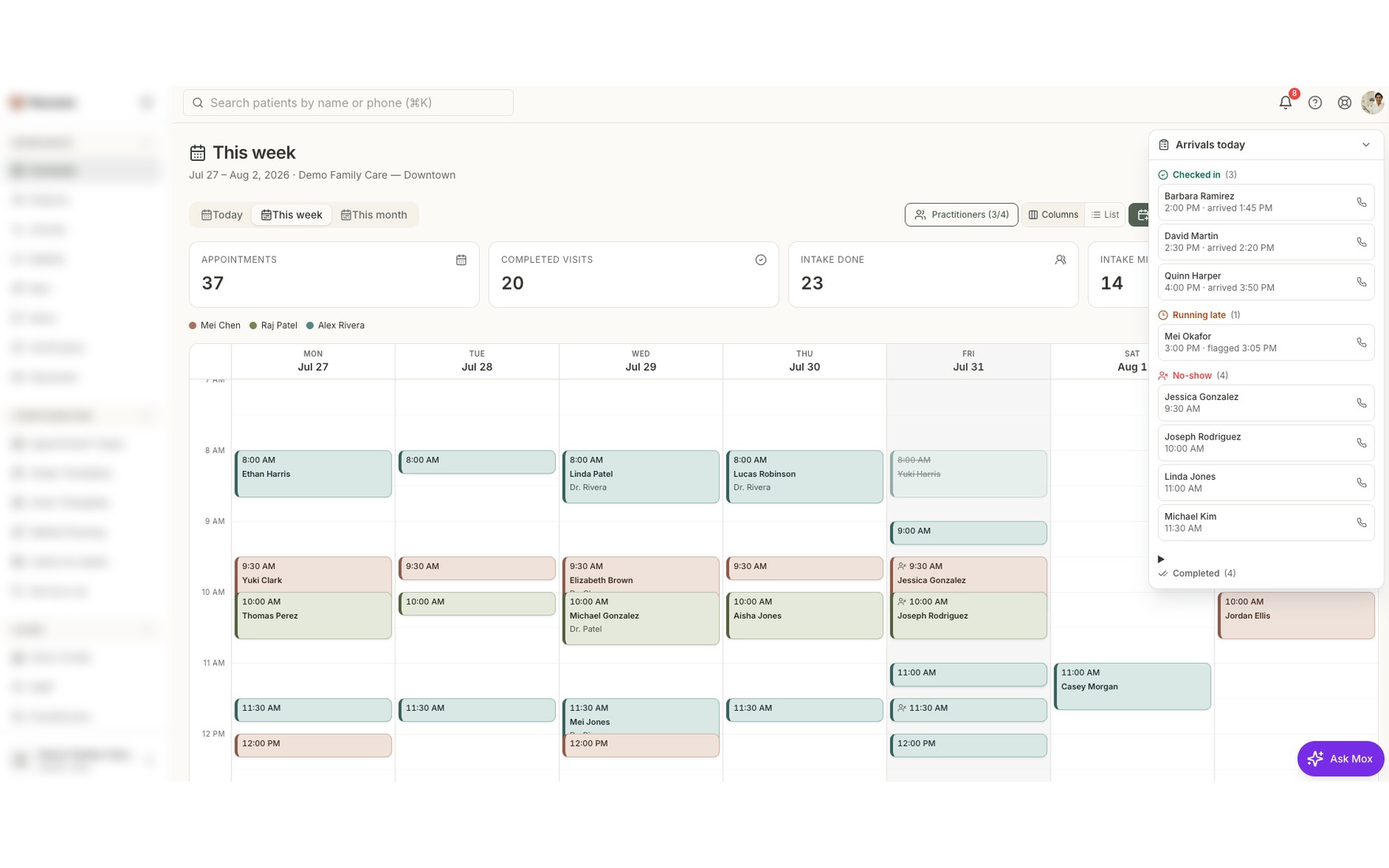
04 · Scheduling on the same record
Per-practitioner calendars, visit types, buffers, and multi-location routing — booked against the same patient the chart reads from.
Learn more about 04 · Scheduling on the same record →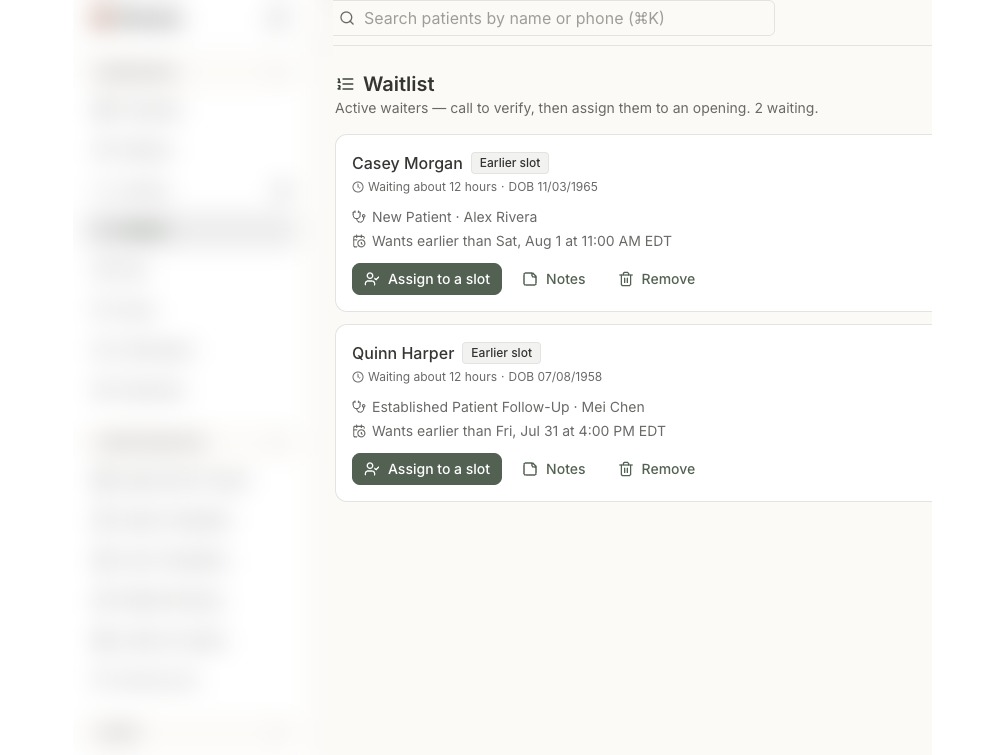
05 · Waitlist that refills gaps
A cancellation goes out to the waitlist by text. First to accept takes the slot and the calendar updates itself.
Learn more about 05 · Waitlist that refills gaps →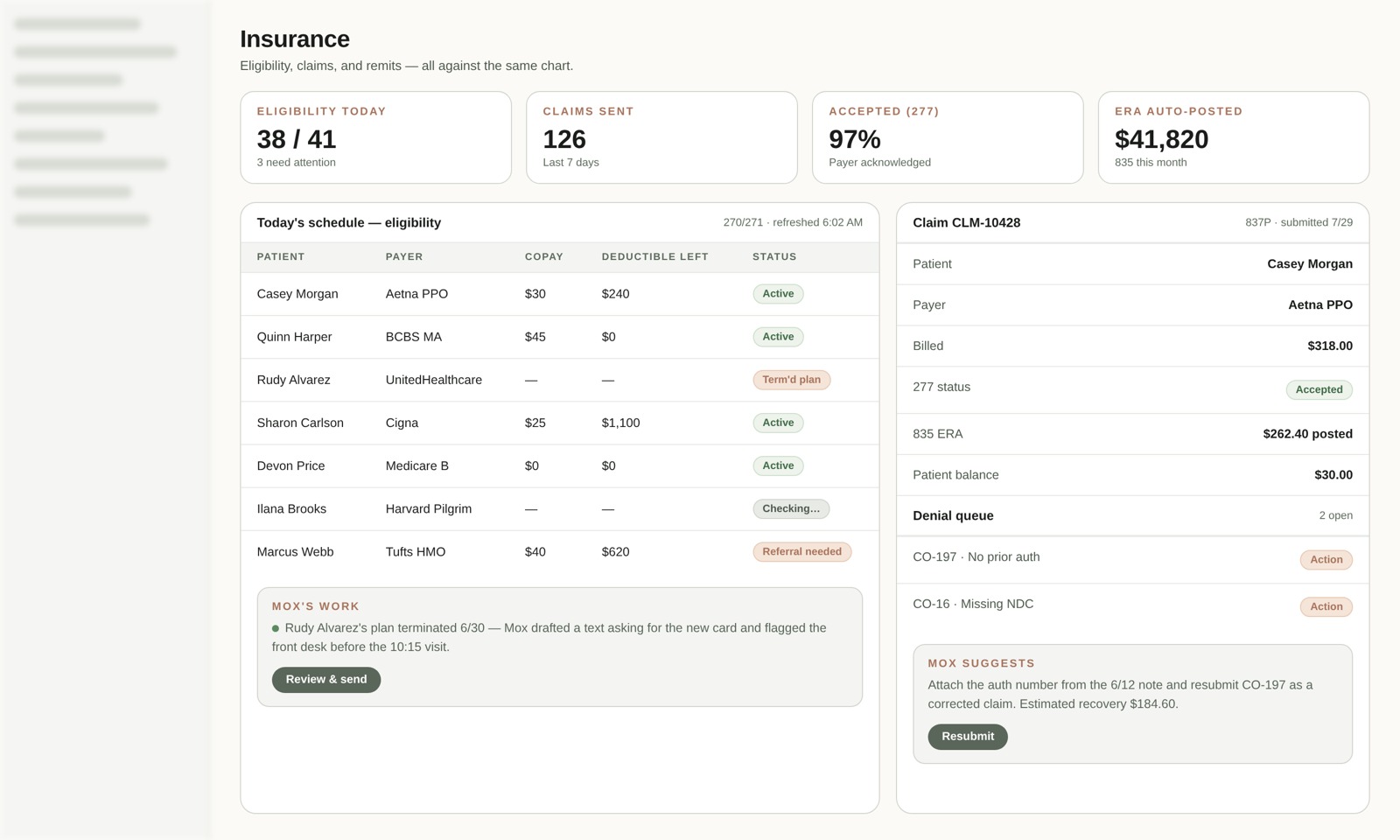
06 · Eligibility & claims built in
Real-time 270/271 before the visit, 837P claims from chart charges, 277 status without phone calls, and a denial queue with suggested fixes.
Learn more about 06 · Eligibility & claims built in →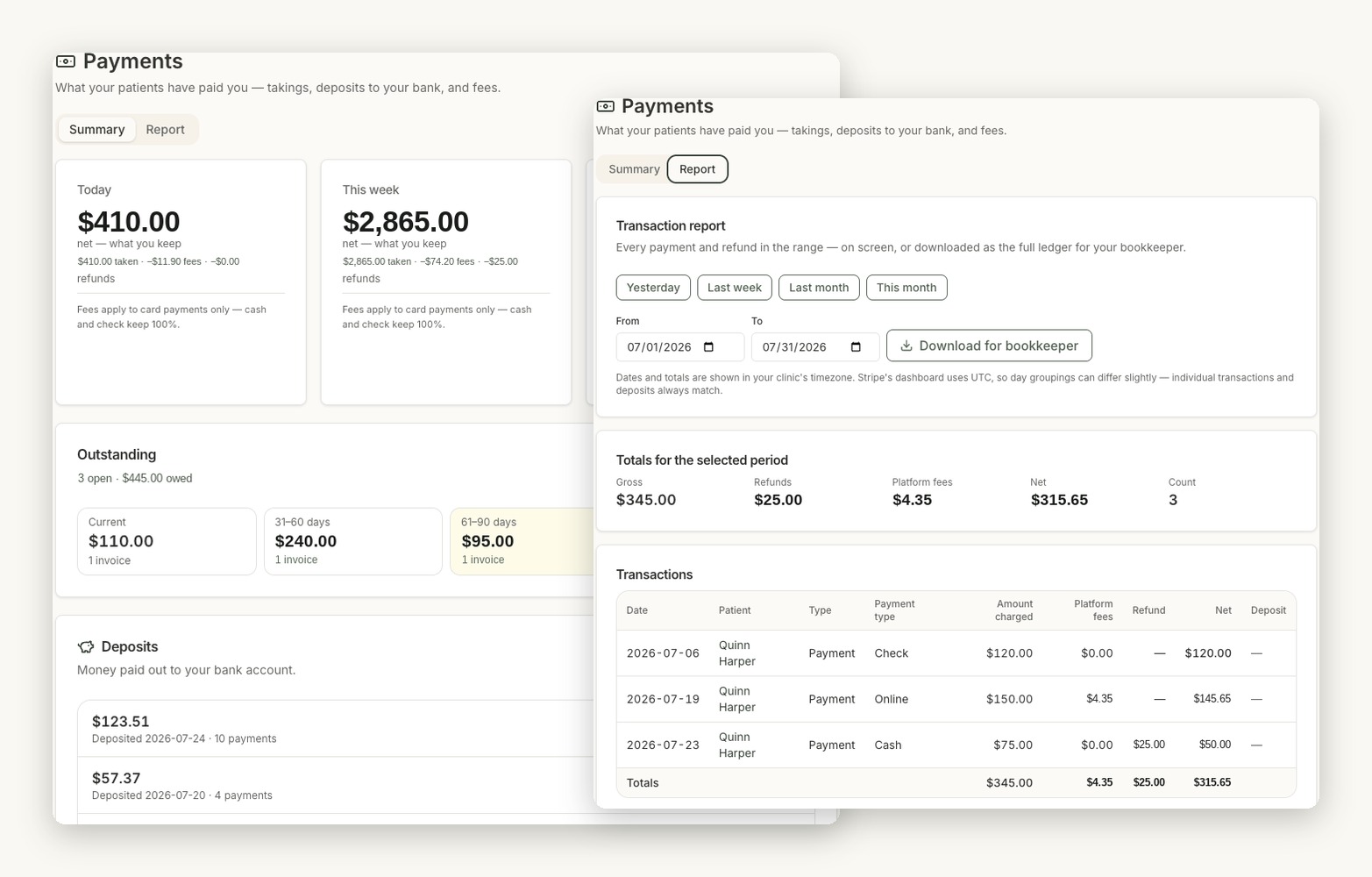
07 · Payments & ERA auto-posting
835 ERAs post against the claim, the invoice, and the patient balance in one pass. Manual posting becomes the exception.
Learn more about 07 · Payments & ERA auto-posting →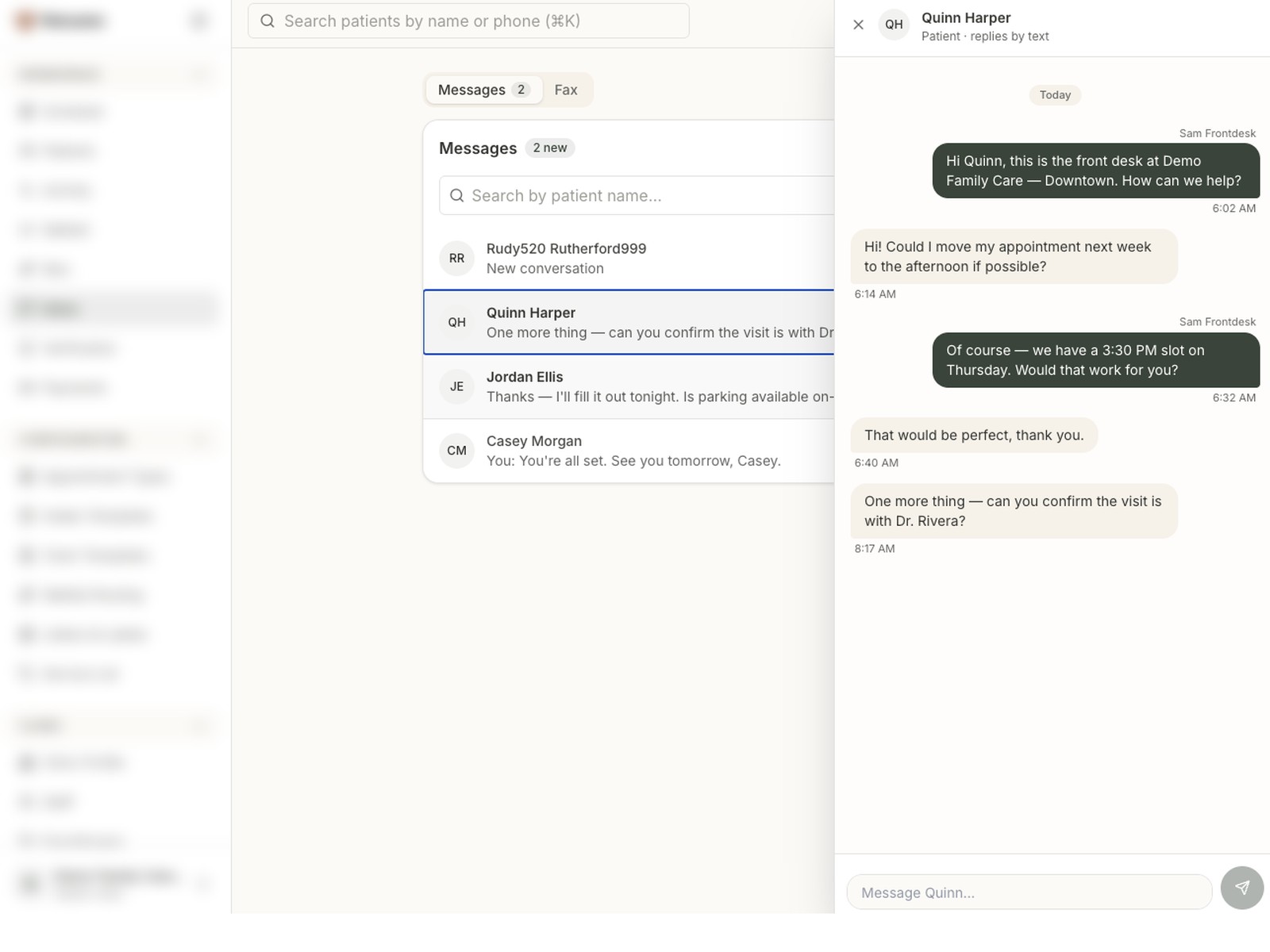
08 · Documents, fax, and messaging
Referrals, labs, consents, and faxes attach to the record automatically — and secure patient messaging files to the same thread.
Learn more about 08 · Documents, fax, and messaging →The principle
A chart is only as smart as the spine underneath it.
Build the record right and the AI can cite instead of guess, the claim can generate instead of wait, and the audit trail can answer instead of shrug.
The shared problem
Legacy EHRs weren't built for AI. Bolting it on doesn't fix the spine.
Most systems in this market were designed decades before ambient notes, structured intake, and automated claims existed. Adding an assistant on top of a record it can't fully read leaves clinicians doing the same retyping — with a chatbot watching.
- The EHR is where data goes to be retypedIntake answers, referral letters, and faxed reports get re-keyed into the chart by hand — often by two different people on two different days.
- Documents live in five placesLabs in a portal, imaging on a disc, referrals in email, consents in a scanner folder. Nothing is where the visit is.
- Tab-juggling during the visitA spreadsheet, a Word template, the legacy EHR, and a PDF viewer — all open at once while the patient waits for eye contact.
- Scheduling sits outside the chartBookings arrive from a widget that doesn't know the patient, so someone copies the same details into three systems before the visit starts.
- Insurance is a separate stack againEligibility in a payer portal, claims in a clearinghouse, patient balances in a third tool — reconciled by hand at the end of the month.
- AI bolted on can't see the recordA chatbot pinned to a legacy database guesses instead of citing. If it can't read the structured chart, it can't be trusted to draft into it.
Four systems, one patient fact — entered four times, reconciled by hand.
What we built
Intake to billing, on one spine.
Patient data starts in intake, flows through the schedule and the chart, picks up documents and codes, and closes out into claims and payments — without a single export, upload, or second login.
Intake
A chat-style intake patients finish on their phone. Structured answers land in the chart before the visit — no clipboard, no scanner tray.
Schedule
Booking, reschedules, waitlist autofill, and self check-in run against the same calendar and the same patient record.
Chart
Ambient notes, one-click proposals from labs and faxes, and plain-English questions answered with row-level citations.
Documents
Faxes, referrals, labs, and consents attach to the record automatically and stay searchable alongside the note.
Insurance
Real-time 270/271 before the visit, 837P claims from chart charges, 277 status tracking, and a denial queue that gets worked.
Billing
835 ERAs auto-post to the claim, invoice, and patient balance in one pass. The visit closes out without anyone retyping it.
Safe by architecture
AI you can put in a chart — because you can audit every move it makes.
Nothing lands in the record without a human. Every answer cites its source, every action is logged to an append-only trail, and the whole platform runs on a HIPAA-ready, BAA-backed foundation.
Append-only audit trail
Every read, edit, AI proposal, message, and claim writes to a hash-chained log. Tamper-evident by design, exportable on demand.
Human in the loop by default
Mox drafts; clinicians accept, edit, or reject. Prescriptions and diagnoses always require a signature — no silent writes.
Provenance on every field
Each entry shows who wrote it — you, a teammate, or Mox — and the source it drew from. No mystery text in the chart.
HIPAA-ready architecture
BAA-backed, encryption in transit and at rest, role-based access, template versioning, and consent enforced on every outbound message.
One record, one day
What a Tuesday looks like when nothing has to be re-entered.
The same patient fact is captured once and used everywhere it's needed — schedule, chart, document, claim, balance.
The chart already knows the patient
Intake finishes on the couch. Answers arrive structured and cited, and eligibility is verified before anyone opens the schedule.
A cancellation refills itself
The waitlist gets a text offer, the first accept takes the slot, and the calendar, chart, and reminders all update on their own.
Ambient note, structured output
The visit becomes a SOAP note with problems, meds, and plan. The clinician edits inline and signs — no evening documentation.
Charges become a claim
Codes captured in the note flow into an 837P claim without an export. Status streams back as 277 responses, not phone calls.
A fax lands where it belongs
An inbound report is read, matched to the patient, and proposed as a chart entry. A clinician accepts it in one click.
Reconciliation is already done
ERAs posted as they arrived. Denials were worked in-line with the reason and the suggested fix, not stacked for a rainy day.
Migration without the drama
Bring your charts over in an afternoon.
C-CDA compliant import moves patients, problems, medications, allergies, notes, and documents together. We rebuild your templates, run a side-by-side week, and stay on the line through your first clean claim.
Common questions
What makes this different from an EHR that added AI?+
Retrofitted AI sits on top of a record it can't fully read or write. Moxcares was built AI-native: intake, scheduling, charting, documents, insurance, and billing share one data spine, so the AI reads the same structured record your clinicians do — and every answer is cited to the exact row, note, or lab it came from.
Does AI write into the chart on its own?+
No. Mox drafts, a human accepts. Prescriptions and diagnoses always require a clinician signature, and every AI action stays a proposal until a person acts on it. Each proposal, edit, and acceptance is logged.
Is it HIPAA compliant and auditable?+
Yes. BAA-backed, encrypted in transit and at rest, role-based access, and an append-only hash-chained audit trail across every read, edit, AI proposal, message, and claim. You can always answer who did what, when, and on whose approval.
How hard is it to move our charts over?+
C-CDA compliant data import brings patients, problems, medications, allergies, notes, and documents across together — usually in an afternoon. We map your templates and run a side-by-side week before you cut over.
Does insurance and billing really live in the same system?+
Yes. Real-time 270/271 eligibility runs before the visit, chart charges become 837P claims, 277 status streams back, and 835 ERAs auto-post against the claim, invoice, and patient balance. No export, no second login.
What does it cost?+
Simple per-clinic tiers: Starter $99/month, Growth $199/month, Practice $349/month. No per-provider seat fees, no claim seats, and AI usage is included in every tier.
Why we built this
Moxcares was born in a hospital waiting room. Our founder watched his family fill out the same forms again and again — first through months in the NICU with his premature son, then through his wife's diagnosis — while clinicians who wanted to be present were stuck typing into systems built for billing, not care. We rebuilt the record so the software gets out of the way.
Read our story →Ready to future-proof your practice?
15-minute walkthrough · 7-day trial after · Founder pricing locked for annual plans
Book a live demo